Toron Castle
Toron Castle
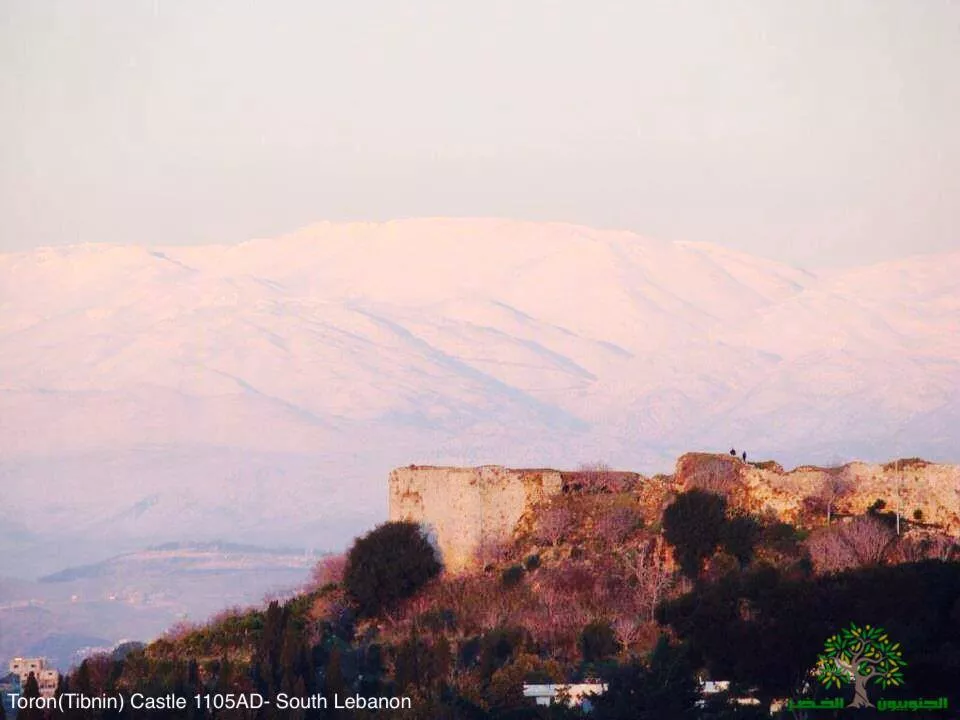
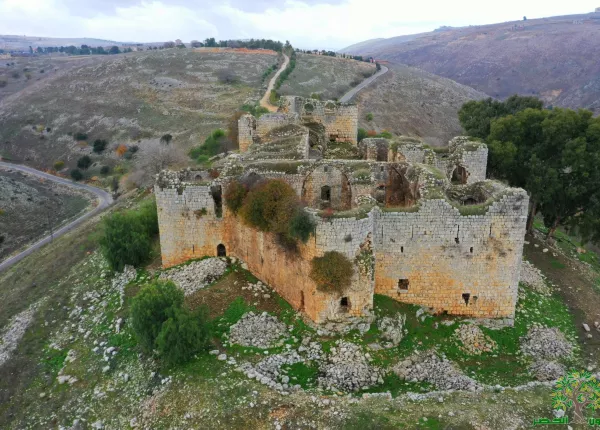
Tibnin Castle stands on a high mound whose lower layers date to the Bronze Age. This base shows that the site was used long before the Crusader fortification. Archaeological sources confirm that the Crusaders built Toron Castle in the early twelfth century on top of this older mound. It became one of their earliest military centers in the Upper Galilee. The castle controlled the road between Tyre and Damascus and served as the seat of the Lordship of Toron in the Kingdom of Jerusalem. Latin records show that the castle also had an administrative role linked to the surrounding villages and their agricultural production.
After the Battle of Hattin the castle surrendered to Saladin for a short period. In 1266 the Mamluks demolished large parts of it to prevent the Crusaders from using it again. This destruction affected main structural sections of the fortress. The site kept its strategic value in later periods because it overlooks the hills and villages between Tibnin and Bint Jbeil.
In the eighteenth century Sheikh Nassif al Nassar rebuilt the castle over the remains of the medieval fortification. This work added late Ottoman defensive elements to the towers and walls while keeping the circular layout of the mound and the older tower positions. During the rule of the Nassar family the castle held military and administrative functions tied to local governance in Jabal Amel and to movement between the coast and the interior.
Archaeological reading of the site reveals a clear sequence of layers. The Bronze Age mound forms the base. Crusader masonry follows. Mamluk rebuilding appears in reinforced foundations. Ottoman additions include walls adapted to firearms. This sequence makes the castle an important record of five successive periods.
The castle holds strong value for the study of Jabal Amel’s history. It helps explain the rise of local leaders in the seventeenth and eighteenth centuries. It supports research on rural settlement patterns in southern Lebanon. It serves as a reference point for understanding the system of fortresses between Tibnin, Bint Jbeil, and Safad. It also clarifies how the site related to the road network that linked Tyre with the Syrian interior.
These factors led to the inclusion of Tibnin Castle in the Jabal Amel fortresses file on the UNESCO Tentative List. The site shows rare continuous occupation from prehistory to the modern period and holds architectural evidence from each stage.

Related Posts
-
 Castles and Towers
 -
 Castles and Towers
 -
 Castles and Towers