Chamaa Castle
Shamaa Castle (Qalaat Chamaa / Scandelion Castle)
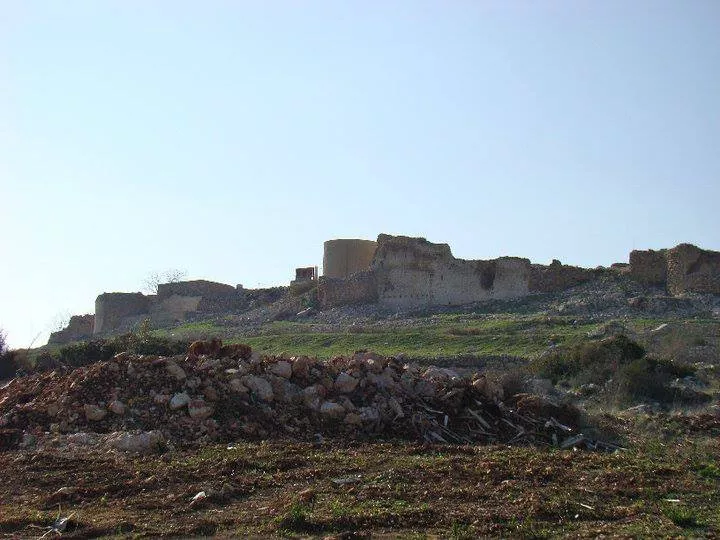
Shamaa Castle stands on a high hill that overlooks the coastal plain between Tyre and Naqoura. The hill controls inland and coastal routes in South Lebanon. The site is also tied to the nearby shrine of Shamoun al-Safa, which local tradition links to Saint Peter. This link gives the castle and the shrine a shared historical and religious role in Shamaa.
The form of the hill and its position near the Ladder of Tyre suggest early use. Confirmed archaeological evidence begins in the Late Roman and Byzantine period, shown by the mosaic found inside the castle and the Roman–Byzantine remains at the nearby site of Ermet Tell. No source proves continuous settlement on the hill before this period, although it is possible that the summit served a funerary or watch function in an earlier time.
A strategic Crusader fort was built on the hill around 1116. Latin sources refer to it as Scandelion Castle. It played a role in monitoring fortified Tyre and cutting its supply routes until the city fell to the Crusaders in 1124. At the end of the Crusader period the site passed to the Mamluks after 1291, and its military function declined.
During the Ottoman period, tax records from 1596 list Shamaa as a small village in the Tibnin subdistrict of the Safad district. The castle saw major reuse in the mid-eighteenth century when Sheikh Nasif al-Nassar of the Ali al-Saghir family restored it as a fortified center. Sources record an olive press and residential units inside the walls during this phase. Ahmad Pasha al-Jazzar later destroyed the fortifications of the Ali al-Saghir in 1781, which affected Shamaa as well.
European travel accounts give precise descriptions of the castle in the nineteenth century. Victor Guérin (1875) and the Survey of Western Palestine (1881) describe curtain walls with semicircular towers, interior spaces divided into two main sections, and about sixty dwellings. They note reused granite columns taken from an older structure, several cisterns, and the use of some rooms as stables. Guérin also reports that families from the Metawali community lived within the ruins at that time.
During the July 2006 war, Israeli airstrikes damaged the castle. The main tower was partly destroyed and parts of the northern façade were hit. Interior remains also suffered damage. The shrine of Shamoun al-Safa was later restored with support from the Qatari program for the rehabilitation of damaged religious sites. Restoration work on the castle began in 2014 with funding from the Italian government.
During the 2024 assault, UNESCO granted the castle enhanced protection as part of a group of thirty-four endangered cultural sites in Lebanon. Clashes occurred near the hill, and the surrounding area came under shelling that caused new damage to the surviving structures. On 31 December 2024, the first joint patrol of the Lebanese Army and UNIFIL entered Shamaa after the ceasefire, which allowed an initial assessment of the damage to the castle and its surroundings.

Related Posts
-
 Castles and Towers
 -
 Castles and Towers
 -
 Castles and Towers