Mais Castle
Mais Castle
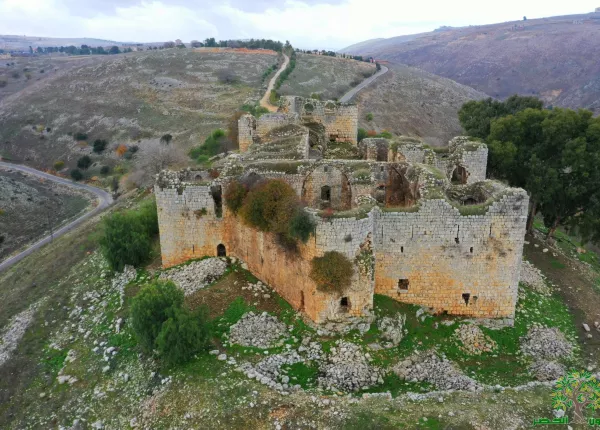
One of the ancient but neglected castles of Jabal Amel, located near the town of Ansar in South Lebanon. It forms an independent real estate unit known as (Mazraat Qalaat Mais). The castle sits on an elevated area of no less than ten thousand dunums, overlooking wide areas of the South and the villages of Jabal Amel. It lies between Zrariyah to the south, Ansar to the north, Brieqaa to the east, and Wadi Jahannam and the sea to the west. From the castle, one can see villages of Saida and Nabatieh, all the way to Beaufort Castle (Qalaat al-Shaqif), and villages of Tebnine and the central sector. Wherever you stand within the fortress, its height reveals the hidden landscape, hills, and ridges of Jabal Amel.
Historical References
Historical evidence extensively mentions the existence of Mais Castle or Fort Mais, with estimates of its age ranging between 1,000 Hijri years or more than 300 years, establishing a clear fact: this castle is ancient, witnessed conquests, and endured battles that took place around it. Mais Castle, also known as the Castle of Abu al-Hassan, is referenced across many historical texts alongside other old Jabal Amel castles such as Beaufort, Tebnine, Niha, and Hunin. Some of what is mentioned:
- Sayyid Mohsen al-Amin: “Qalaat Abu al-Hassan on the coast of Saida, today called Mais Castle, is in ruins. It was built by some Muslim princes.”
- Shihab al-Din al-Baghdadi: “Qalaat Abu al-Hassan is a great coastal fortress near Saida in Greater Syria. It was conquered by Yusuf ibn Ayyub and granted for a time to Maimun al-Qasri and others. It is believed to be the same as Mais Castle.”
- Sheikh Ibrahim Suleiman: “Mais Castle lies in a wide plain south of the village of Ansar.”
- Qamus Lubnan (Lebanon Encyclopedia): “Mais Castle belongs administratively to the Nabatieh district. Its inhabitants were 5 Catholics.”
Deteriorated Condition
In the nearby valley to the south, dozens of orchards spread across the eastern outskirts of Zrariyah. Locals say that the walls of some orchards were built using stones taken from the castle. Much of the fortress was disfigured after its walls and towers were destroyed in the last quarter of the previous century; its stones were moved to orchards or sold cheaply.
Natural weathering left heavy damage on the site, while human acts of vandalism contributed to the collapse of its rooms, ceilings, upper arches, and ancient remains. Shepherds later altered many of its rooms, chambers, and old cells—blocking some, removing others, or creating openings to suit livestock. This made entry difficult for visitors due to accumulated waste, odors, and insects.
Locals confirm that during the Lebanese civil events, the castle experienced a surge of illegal excavation. Treasure hunters dug through its floors and tunnels, breaking walls to extract artifacts. Some stone basins and carvings were taken to decorate private homes.
On its western side, part of a newer ceiling collapsed, bringing down several arches beneath it. Today, anyone visiting the castle finds it in a state of near-death, as if it is breathing its last—its towers, arches, corridors, and remaining walls collapsing—without any intervention from the Lebanese state or the Directorate General of Antiquities to rescue this ancient historical site.
Sources
- Mu'jam Qura Jabal Amel – Sheikh Suleiman Daher Al-Aamili – Vol. 2 – p. 171
- Khitat Jabal Amel – Sayyid Mohsen al-Amin
- Mu'jam al-Buldan – Shihab al-Din al-Baghdadi
- Buldan Jabal Amel – Sheikh Ibrahim Suleiman
- As-Safir Newspaper – March 9, 2004 – by Kamil Jaber (edited)
- Wikipedia
Required Actions
The Directorate of Antiquities, along with the municipalities of Ansar and Zrariyah and the regional union of municipalities, must urgently fence the site and prohibit entry until a full restoration and excavation project is prepared. All stones removed from the castle should be identified and returned, as they are key architectural elements. Continued neglect, especially since the issue was raised in 2004 without action, will lead to the complete destruction of this historically significant site.
Green Southerners
Related Posts
-
 Castles and Towers
 -
 Castles and Towers
 -
 Castles and Towers