Beaufort Castle
Beaufort Castle
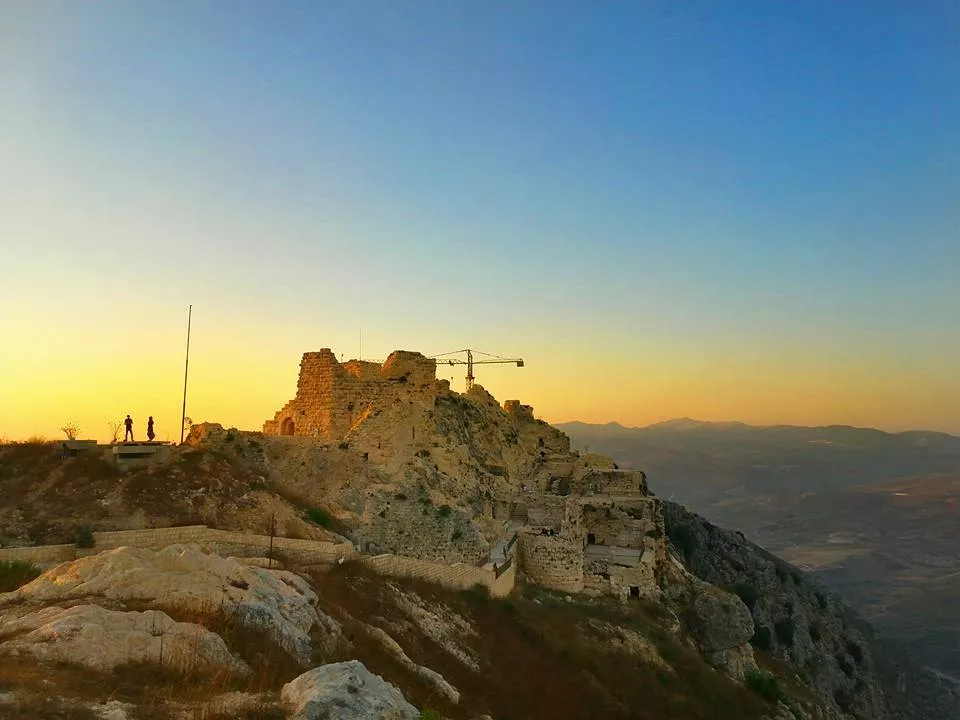
Beaufort Castle stands on a high rocky spur overlooking the Litani River near the village of Arnoun in the Nabatieh district. The position provides direct visual control over the valley and the routes leading toward the Galilee, which supports the likelihood of earlier occupation before the Crusader period, even though excavations have not revealed a clear architectural plan from an earlier phase. Evidence for the period before 1139 remains limited, yet the dominant topography and the settlement history of the upper Litani valley suggest a possible earlier defensive function.
King Fulk took control of the site in the first half of the twelfth century and reorganized it according to the principles of Crusader military architecture. This included the construction of a large western keep and the arrangement of defensive and residential units around it in a layout consistent with other Crusader fortresses in the Upper Galilee and Jabal Amel. Latin sources describe the castle as one of the advanced frontier positions of the Kingdom of Jerusalem.
In 1190 Saladin captured the castle during his campaign after the Battle of Hattin. It then became part of the Ayyubid defensive network before entering the Mamluk system of fortifications, which reshaped military positions across the Galilee and Jabal Amel during the thirteenth century. References to the castle in Mamluk campaign records relate to controlling internal routes and securing the northern approaches of Jabal Amel.
Under Ottoman rule the castle maintained a military function and continued to serve as an observation point over the route linking Nabatieh to the Galilee. Late Ottoman references indicate its use as a minor guard post overseeing movement between the coast and the interior.
The castle was heavily bombarded before and during the Israeli invasion of 1982, which caused significant structural damage. During the occupation the Israeli forces converted the site into a military position. In this period the castle was subjected to repeated shelling and excavation works that affected several architectural layers, especially in the upper defensive structures. After the liberation in 2000 documentation and restoration work began with the aim of stabilising weakened sections and preserving the surviving Crusader masonry.
Beaufort Castle is listed in the Jabal Amel Castles Tentative File for UNESCO due to its importance in tracing the development of military architecture in southern Lebanon. The site preserves a clear sequence of Crusader, Ayyubid–Mamluk, and Ottoman phases, along with evidence of its transformation in the modern period.


Related Posts
-
 Castles and Towers
 -
 Castles and Towers
 -
 Castles and Towers