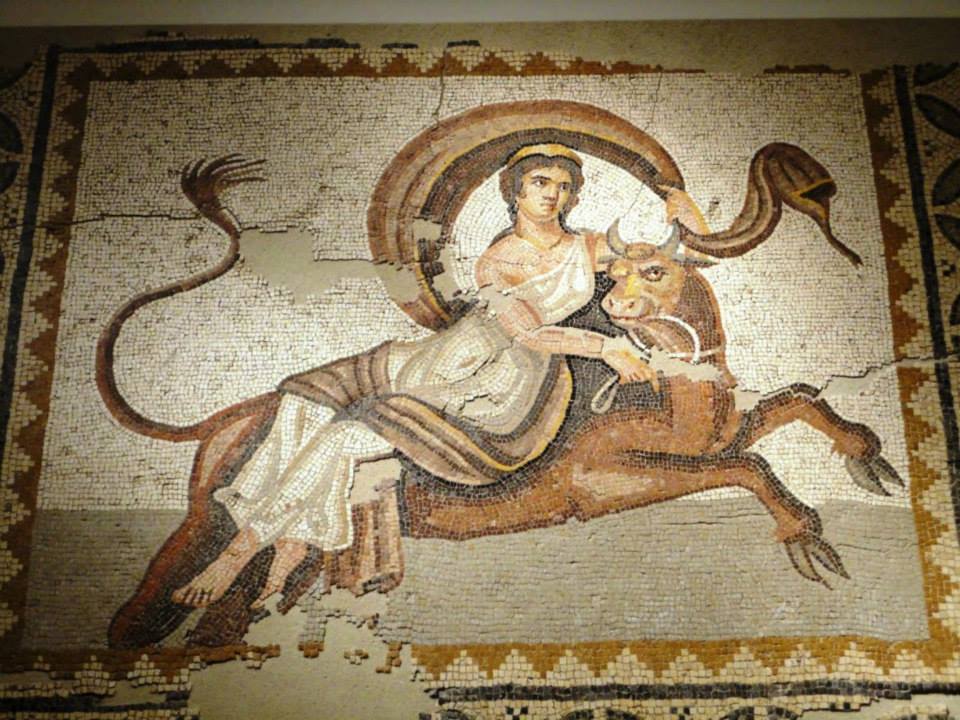
Europa, the Phoenician Princess of Sidon
Green Southerners
Europa, the Phoenician Princess of Sidon Who Gave the Continent Its Name
The legend, immortalized in Greek mythology and mentioned by the Alexandrian poet Musaeus in 1800 B.C., says that the Sidonian king Agenor (King of Men), who was considered the ruler of Phoenicia, had with his wife Telephassa or Telephe (according to the Greek name) a daughter of exceptional beauty and intelligence named Europa, and two sons; some accounts mention three brave and wise sons: Cadmus, Cilix, and Phoenix.
The legend says that Zeus, the god of the Greek pantheon, fell in love with the Phoenician princess Europa when he saw her once from Mount Olympus. He came to the shores of Sidon, where the princess used to stroll and always dreamed of sailing to lands where no one had reached (the eternal Phoenician dream). Disguised as a bull, he approached her and her maidens on the shore, lured her, and carried her on his back across the sea, not revealing his true identity until reaching the island of Crete.
The legend narrates the journey of the Sidonian princess from the shores of Sidon to the new land until Zeus reached Greece and announced his marriage to her. As Zeus was captivated by her, so were the people of Greece, and the land and continent were named “Europa.” Europa bore children with the god Zeus, each of whom ruled a city afterward. The Greeks always maintained this belief that Sidon was the homeland and cradle of the name Europe, and it attracted their attention. When Alexander the Great arrived in Phoenicia in the 3rd century B.C., he sought to offer sacrifices to the city’s god, Melqart, who had a temple in the city considered the most important religious center in the ancient world (which the locals refused, some saying he came as a conqueror, others that he was not Phoenician or a follower of their religion, leading to a war between Alexander and Sidon that resisted him for seven months before he entered and offered the sacrifice in Melqart’s temple after destroying the city for resisting him).
The legend says that King Agenor searched for his daughter but could not find her, so he sent his three sons after her, instructing them not to return without her. The journey of the three led to adventures that opened new horizons for legend and human history. Cadmus reached Greece and was welcomed, teaching them the Phoenician alphabet and founding the city of "Kadmeia." Cilix settled in Asia Minor, from which Cilicia took its name; later, his son Thasus became the ruler of the island that bore his name. Phoenix’s journey led him to Africa, where he settled, and the land was named Phoenicia after him (his name and the name of his homeland).